
Wall Printing vs. Vinyl: The Simple, Small-Business ROI

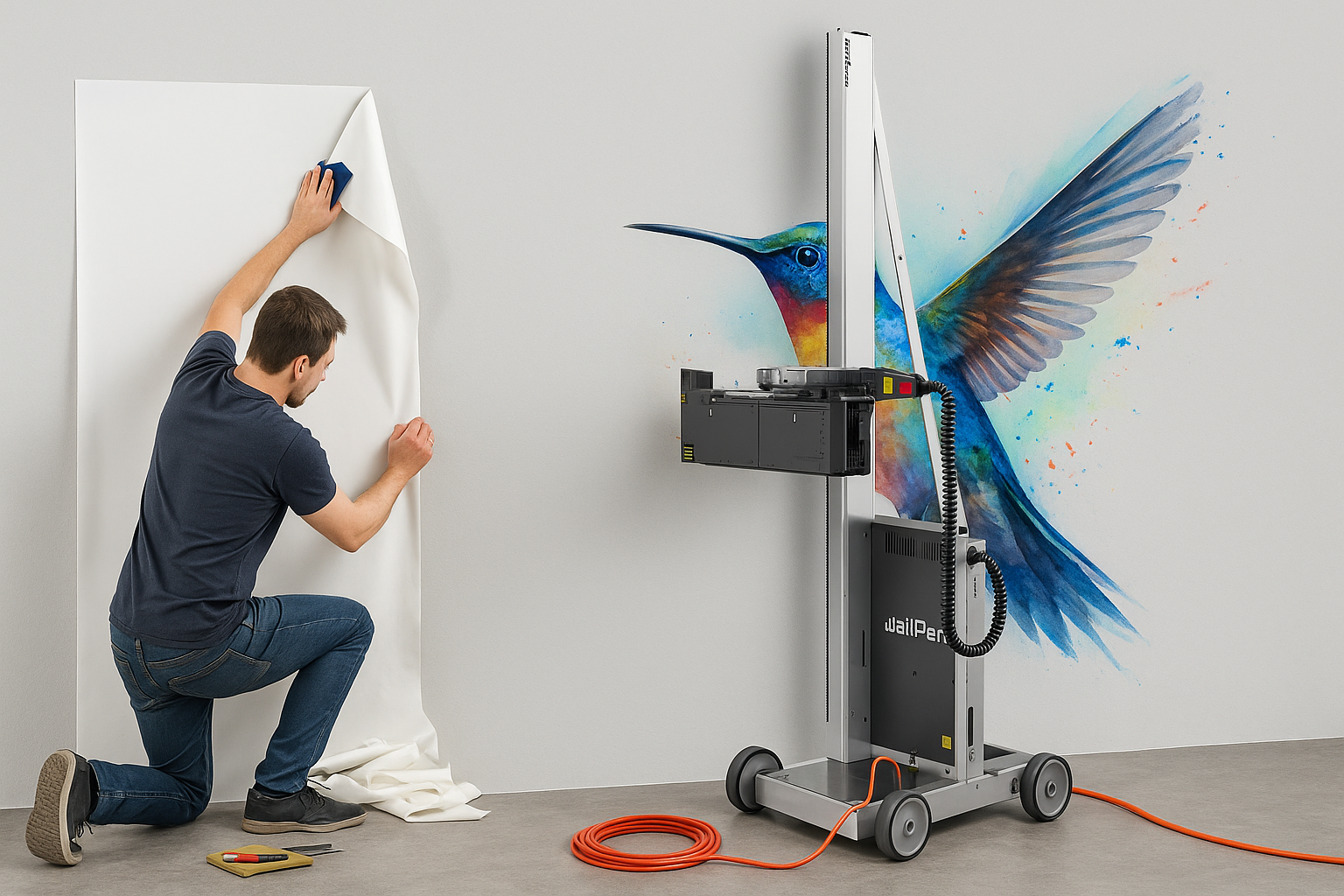
If you run a restaurant, clinic, gym, or shop, you don’t have time for projects that eat up days, require three vendors, and leave you with cleanup and surprise costs later. That’s why direct-to-wall printing is such a win. Instead of ordering vinyl panels, waiting on shipping, and paying installers (plus paying again to remove it when you update), a technician shows up, sets up in minutes, and prints your design straight on the wall—no seams, no peeling edges, no sticky residue. For small businesses that change menus, promos, or seasonal decor a few times a year, the lifetime cost—and the headache—often beats vinyl. It’s faster to deploy, easier to refresh (you can literally paint over it), and cleaner for customer-facing spaces where hygiene and durability matter. In short: less fuss, more “looks great,” and better value over the year.
What it really costs (install now, change later)
Vinyl looks cheaper at first glance because you’re paying mostly for printed material and an installer’s time. Most shops will quote a commercial-grade vinyl mural somewhere in the single digits to low teens per square foot for the material, then add another chunk for installation. On a typical 300 sq ft wall, you’re usually staring at a few thousand dollars to print, ship, and install—plus a day (or two) where ladders and panels take over your space. The quiet gotcha is what happens later: when you want a new design, you pay again to remove the old vinyl, clean up adhesive, patch any damage, and then install the next set of panels. That removal line item—often hundreds to more than a thousand dollars for a medium wall—shows up every time you refresh.
Direct-to-wall printing flips that math. You’re paying for a technician to arrive with the printer and lay down high-definition ink directly on your painted wall. Up front, the quote may be higher than vinyl for the same size because you’re buying a premium finish and an on-site service. But when you’re ready for a new look, you don’t peel anything—you paint over it. A quick repaint (often handled by your regular painter or maintenance crew) is dramatically cheaper than vinyl removal and re-install. For a business that updates seasonally—say a brewery swapping artwork each quarter or a clinic refreshing rooms twice a year—the total cost over a year or two often ends up lower with wall printing, and you avoid the scheduling circus that comes with panel removal and re-hanging.
Here’s a simple way to think about it: if you’ll change that wall more than once, vinyl makes you pay a “refresh tax” every single time—remove, clean, re-install. With wall printing, the refresh is a basic paint job and a new print. Fewer vendors, fewer surprises, and money back in your pocket over the life of the wall.
Speed to deploy (and how much hassle you avoid)
Vinyl is a project. You approve the art, wait for printing and shipping, juggle an installer’s calendar, clear space for ladders, then live through a half-day (or more) of panel alignment and seam rolling. If something is off—color, crop, a panel creases—you’re back in the queue. And when you’re scheduling around service hours, staff shifts, or patient visits, that stop-and-start time is real money.
Direct-to-wall printing behaves more like a service call. A tech rolls in, levels the machine, tests a small swatch, and starts printing. There are no panels to handle, no seam matching, and far less staging. For most small businesses that means you can open for lunch after a morning print, or keep the gym running while one wall is being done. It’s also friendlier for tight spaces—hallways, alcoves, rooms with built-ins—because you’re not maneuvering big sheets through doorways.
Where this really compounds is multi-site or multi-room work. With vinyl you’re coordinating shipments, storage, and certified installers at each location—every move adds cost and delay. With wall printing, the same tech (or crew) can route location to location and print in place. Fewer moving parts, less waiting, and a predictable rhythm that keeps your business open while the look of the place levels up.
Hygiene, seams, and staying compliant
If your space needs to look clean and stay clean—think clinics, fitness studios, restaurants, schools—seams are the enemy. Vinyl murals arrive in panels. Panels mean edges, overlaps, and tiny ridges that catch dust, grease, moisture, and sanitizing residue. Over time, that can turn into dark lines, lifted corners, and extra staff time spent wiping what never quite looks spotless.
Direct-to-wall printing is one continuous image cured right on your painted surface. No seams. No edges. You clean it the same way you already clean the wall—whatever your paint and facilities plan allows. For food service, that means quicker nightly wipe-downs without snagging a cloth on an edge. For healthcare and PT, it means fewer crevices to harbor grime and an easier path to meeting your internal hygiene protocols. And when the wall finally needs a refresh, you repaint and reprint—no adhesives to strip, no wall repairs from tear-offs.
Bottom line for small teams: fewer problem spots to maintain, fewer “can someone fix that corner?” requests, and a more consistently “new” look week after week.
Business impact that shows up on the balance sheet
Wall graphics aren’t “nice to have”—they change behavior. When the message sits where decisions happen (host stand, ordering line, tap list, front desk), you get more upsells and more “yes.”
Direct-to-wall makes those messages easy to keep current. Swap a seasonal menu, a new membership offer, or a program launch without a multi-vendor production cycle. Your wall can promote tonight’s special, not last month’s campaign.
There’s a softer win, too. Fresh, intentional visuals lift trust and dwell time. Clinics feel calmer and more professional; gyms feel branded and motivating; schools feel proud and easier to navigate.
Add it up and you get two compounding effects a small business can feel: a nudge in average ticket or conversions—and fewer staff hours spent babysitting tired, peeling graphics. Lower friction. Better first impressions. Messages that pay rent.
When vinyl still makes sense
Sometimes vinyl is the right tool. If you’re doing a short-term pop-up or a one-off campaign where day-one cost matters more than refreshability, vinyl can be cheaper up front—and that may be all you need.
Surfaces matter, too. If a wall is heavily textured, contaminated, or not paintable to spec, panelized vinyl can be safer and more predictable than printing in place.
There are also spec-driven cases. Certain projects require specific material ratings (e.g., Type II, abrasion, or fire classifications) where a named vinyl product is the easiest way to tick the box.
And if you’re under strict move-out obligations—where the landlord expects peel-and-restore—removable vinyl might be the cleanest contractual path.
Bottom line: it’s not “never vinyl.” It’s choosing what fits the job, the surface, and the plan to refresh (or not). We’ll tell you straight after a quick wall check which route serves you best.
The three-year cost (easy, small-business math)
Think in “looks,” not line items. Most small businesses don’t put one image up forever—you’ll want a new look for a season, a program launch, or a menu change. So compare three looks over three years on a medium wall (about 300 sq ft): the initial install, plus two refreshes.
With vinyl, the pattern is: print + install now, then every refresh you remove the old panels, clean up adhesive, and install new panels. Using round, middle-of-the-road numbers, that lands you in the $5k–$7k range to install each time, plus roughly $1k–$2k for removal per refresh. Over three looks, you’re typically in the high teens to low twenties (thousands).
With direct-to-wall printing, the pattern is: print now, then for each refresh you repaint and reprint. Repaints are inexpensive compared to vinyl removal, and you avoid the panel logistics. Using similar midpoints, you’ll often land in the same neighborhood overall—and in spaces where removal is fiddly (tight corridors, sensitive areas) or access is tricky, printing in place can come out ahead.
The practical takeaway: on dollars, the totals are usually close enough that the decider becomes everything you don’t have to manage—no panel shipments, no seam fixes, less downtime, and a refresh process your team already knows (paint, then print). That’s time back and fewer moving parts every time you change the wall.
Risk, repair, and end-of-life
Vinyl ages in ways you can see. Edges lift, seams scuff, and adhesive hardens. In busy spots—near doors, sinks, or the host stand—those little flaws turn into daily touch-ups. When it’s finally time to pull panels, you’re dealing with residue, paint tears, and patch/prime before you can even think about the next look.
Direct-to-wall printing avoids most of that. The image is cured right on the paint, so there are no seams to snag and no edges to catch. If a corner gets dinged by a chair or cart, you treat it like a normal wall: quick repair, light repaint, reprint that area or refresh the whole design when you’re ready.
End-of-life is simple, too. You don’t “remove” anything—you repaint. That keeps surprises off the invoice and lets your regular maintenance routine handle the reset. For small teams, that means fewer special calls, fewer “can someone fix this edge?” messages, and a cleaner handoff whenever you decide to change the space.
How to buy this smart (built for small teams)
If you’re juggling staff schedules and a hundred to-dos, the best “offer” is one that removes surprises. Here’s how we structure projects so you get predictable cost, low downtime, and a smooth refresh path.
Start with a clear scope.
We confirm the wall (photos or a quick site check), note surface/paint condition, measure width × height, and lock the art approach. You get a straight number and a print window that won’t disrupt service.
Bundle the refresh.
Most small businesses change looks. We can include one or two repaints + reprints up front (“refresh bundle”), so your next campaign is prepaid and easy to schedule—no hunt for installers, no removal fees.
Schedule around your rhythm.
Mornings before lunch service, between classes, after clinic hours—we plan prints when the space is quiet. Multi-room routes keep you open while we move wall to wall.
Keep assets simple.
We’ll give you an artwork checklist (file type, resolution, color notes). If you don’t have design support, we can template the layout or collaborate with your agency.
Own the next move.
When it’s time to change, your plan is already in place: quick repaint, new art, print. No panels to strip, no surprise line items, no scramble.
Bottom line: buy it like a service, not a construction project. Predictable, quick, and set up for the next look as easily as the first.
—
The takeaway
If you change your walls more than once—or you care about speed, cleanliness, and keeping the doors open—direct-to-wall printing is the simpler, smarter buy. It removes the vinyl “refresh tax,” cuts downtime, and keeps messages current without juggling extra vendors.
Start small if you want: one high-impact wall, one refresh on the calendar. You’ll feel the difference in days—not quarters—and you’ll have a clean, repeatable way to keep your space looking sharp all year.

Latest stories from flow state
Discover transformative wall printing strategies
From Blank Wall to Taproom Magnet: A Brewery Feature Wall That Sells
Overnight taproom wall print that drives photos, promos, and pours—no seams, no downtime, easy reprints.

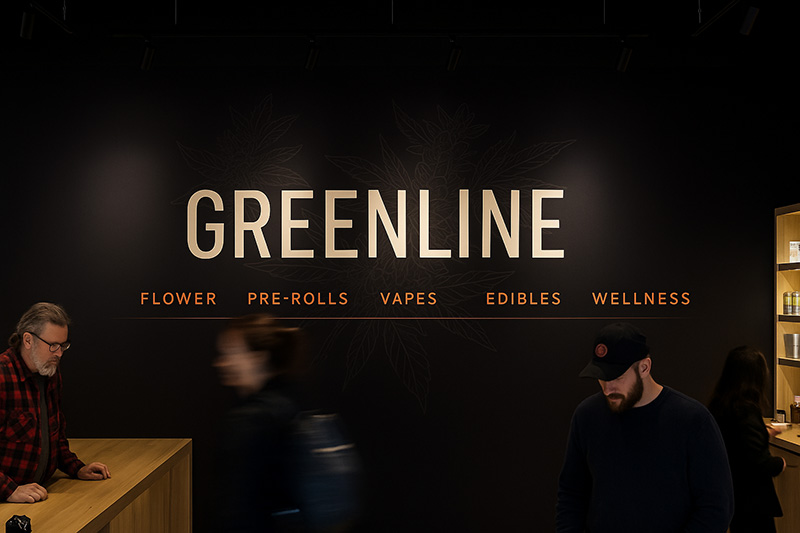
Lighting Up the Brand: A Seamless Feature Wall for a Modern Dispensary
Overnight wall print that drives product discovery and photo-worthy moments—no seams, minimal downtime, easy seasonal refresh.
A Letter From Our Founder: Why Flow State Exists
We turn blank walls into profit-driving experiences—fast, simple, and precise. Here’s why I started Flow State and what I promise you.
Print While the Line Moves: Wall Printing for Restaurants
Turn blank walls into revenue: fast installs, live during service, easy refreshes, and social-worthy moments that keep guests coming back.

Need more information?
Our team is ready to answer your specific questions

Transform your vision now
One wall or many—we’ll help you plan, design, and print with ease.